
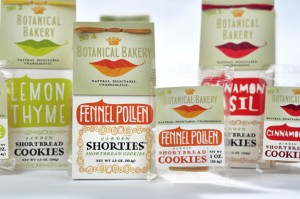
This article documents one brand differentiation framework – the Category Rebellion Framework – applied across five real categories with five real outcomes. The anchor case study is Botanical Bakery: a Napa Valley startup that tripled sales in year one, then tripled them again in year two, a 900% increase in 24 months. The supporting examples (Dollar Shave Club, Warby Parker, Liquid Death, and SPANX) each followed the same logic. Here’s the framework, the evidence, and how to apply it to your brand.
Below is the documented framework behind Botanical Bakery’s results – and how to apply it to any brand in any category.
Most small brands fail at differentiation, not because they lack a good product, but because they look exactly like every other brand in their category. This is the documented story of how one Napa Valley startup identified that problem, broke every visual and messaging convention in their space, and tripled sales in year one, then tripled them again in year two. A 900% increase in 24 months. Here’s the framework behind it, and how to apply it to any brand in any category.
What this article covers:
- What brand differentiation actually means – and why most brands get it wrong
- The Category Rebellion Framework: the 3-step process behind a 900% sales increase
- Botanical Bakery: the full documented case study
- 4 supporting examples: Dollar Shave Club, Warby Parker, Liquid Death, and SPANX
- How to apply the framework to your brand, in any category
WHY BLENDING INTO YOUR CATEGORY IS KILLING YOUR SALES
There’s a specific kind of brand failure that nobody talks about. It’s not the brand that launches badly. It’s the brand that launches fine – gets into stores, builds some distribution, makes decent product – and then quietly disappears because nobody can find it on the shelf.
This is the category blending problem. And it’s far more common than bad branding.
When Sondra Bernstein, founder of Botanical Bakery, called me, she described her product with unmistakable passion. Wild flavors. Unusual ingredients. A genuine obsession with quality. But when I looked at the category she was competing in, shortbread cookies, every brand looked the same. Elegant. Muted. Proper. English.

Her product was anything but. Yet, the brand said otherwise.
The moment that crystallized the problem came from Sondra herself:
“My business partner’s parents went into a store that they know carried our product and were literally standing in front of our cookies staring right at them and they did not recognize them. To say it another way, they did not jump off the shelf.”
That’s the cost of blending in. Not a bad review. Not a failed launch. Just invisible — right in front of the people who already knew the brand existed.
The fix wasn’t a new logo. It was a complete rethinking of what the brand could be.
THE BRAND DIFFERENTIATION AUDIT: WHAT DOES YOUR CATEGORY ACTUALLY LOOK LIKE?
Before you can differentiate, you need to know exactly what you’re differentiating from. Most brands skip this step and end up making cosmetic changes that don’t move the needle.
A real brand differentiation audit documents the visual language, emotional tone, messaging conventions, and buyer expectations of your entire category – not just your top two competitors. The goal is to identify the norm so precisely that the gap becomes obvious.
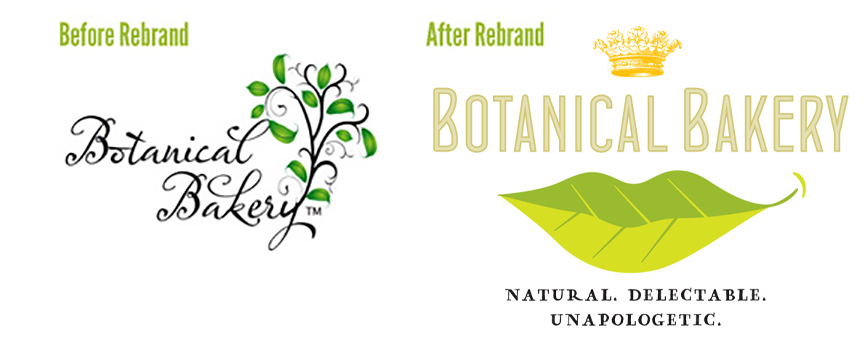
Here’s what that audit looked like for Botanical Bakery, before and after the Category Rebellion Framework was applied:
Category Norm vs. Category Rebel: What the Audit Looks Like
| Dimension | Category Norm (Before) | Category Rebel (After) |
|---|---|---|
| Visual style | Elegant, muted, traditional English | Bold color, expressive, personality-forward |
| Brand name tone | Descriptive, safe | Evocative, ownable |
| Packaging function | Contains product | IS the salesperson |
| Emotional territory | Refined, well-mannered | Wild, indulgent, rebellious |
| Buyer perception | One of many | Chosen for photo shoots out of tens of thousands |
| Press coverage | None | NYT, Forbes, Food & Wine, InStyle, Comm Arts |
| Sales trajectory | Flat | 900% increase in 24 months |
The audit revealed a category that had unanimously agreed on one emotional register: proper, restrained, English-heritage. Every brand was competing for the same positioning. The gap — the emotional territory nobody owned — was the opposite: wild, indulgent, unapologetically fun.
That gap became the brand.

THE CATEGORY REBELLION FRAMEWORK (3 STEPS)
After working with brands across dozens of categories, the pattern behind every successful differentiation strategy comes down to three non-negotiable steps. Skip any one of them and the rebrand produces cosmetic results, not commercial ones.
Step 1: Identify the category norm with precision
Not a vague sense of “everyone looks the same.” A documented, specific inventory of what every major player in your category does visually, emotionally, and in messaging. The more specific the audit, the more obvious the gap.
For shortbread cookies: muted colors, heritage typography, English-manor imagery, restrained copy. Every single brand. Without exception.
Step 2: Find the emotional territory nobody owns
The gap in the audit is where your brand lives. This isn’t about being different for its own sake – it’s about finding the emotional truth of your product that the category has collectively ignored.
Botanical Bakery’s cookies weren’t proper. They were wild. The ingredients were unusual. The process was obsessive. The founder’s energy was anything but restrained. The brand just hadn’t said so yet.
When I said to Sondra, “Your cookies are like Shortbread Cookies Gone Wild,” she immediately said yes. That moment of recognition – when the brand’s true personality finally has language – is the pivot point.
That phrase did something the original brand identity couldn’t: it made the emotional truth of the product instantly clear. It gave the category rebellion a name.
Step 3: Commit fully. Half-rebellion doesn’t work.
This is where most brands flinch. They do the audit, find the gap, and then hedge. They add a little color. They soften the copy. They keep one foot in the category norm because it feels safer.
It isn’t. Half-rebellion produces a brand that’s slightly different – which means it’s still invisible. The category norm is a gravitational pull. You either break free of it completely or it pulls you back.
In the words of Yoda (and this applies directly to brand strategy), “There is no try. There is only do.”
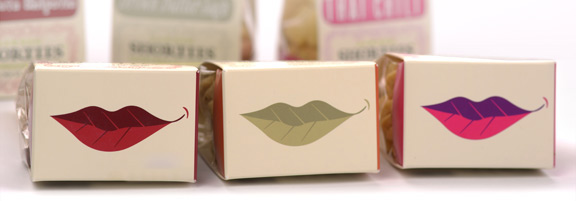
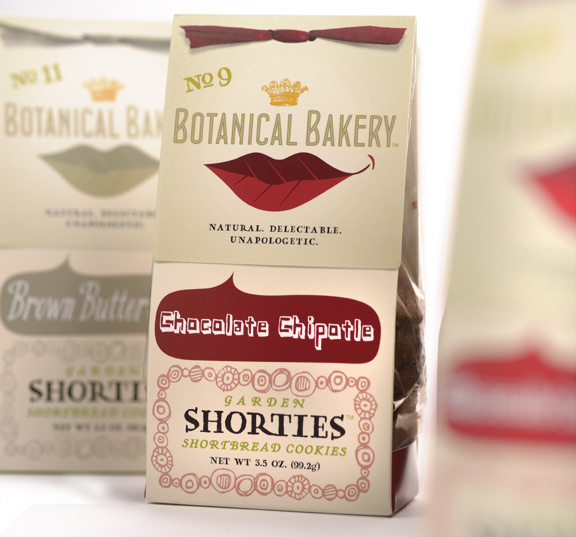
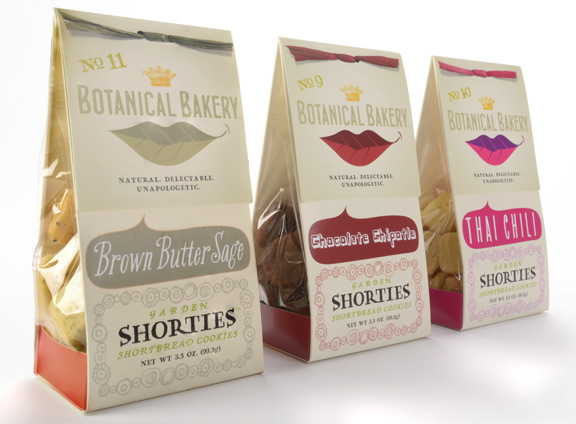
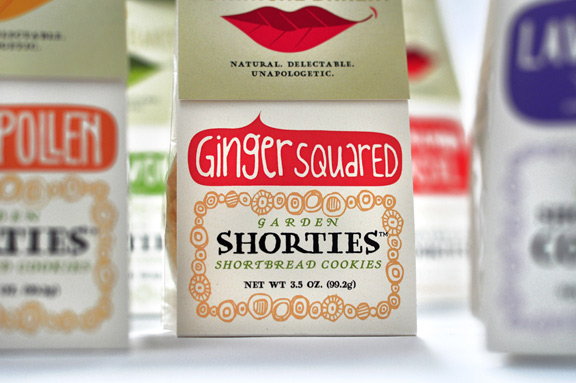
Botanical Bakery went all the way. Bold color. Expressive typography. Copy that said “Unleash your man cave potential” on the back of a shortbread cookie box. Packaging that buyers described as having a personality so strong that people picked up the boxes and put them in front of their own faces.
That’s what full commitment looks like. And that’s what produces 900% sales growth.
BOTANICAL BAKERY: A BRAND DIFFERENTIATION CASE STUDY
The brand: Botanical Bakery, Napa Valley, California. Artisan shortbread cookies with unusual botanical ingredients – lavender, fennel pollen, ginger, and chipotle.
The problem: A genuinely differentiated product trapped inside a generic brand. Blending perfectly into a category it had nothing in common with emotionally.
The intervention: Complete rebrand applying the Category Rebellion Framework. New visual identity, new packaging system, new copy voice, new emotional positioning.
The results:
- Sales tripled in year one after the rebrand
- Sales tripled again in year two – a 900% increase in 24 months
- Three separate major buyers, each handling tens of thousands of brands, chose Botanical Bakery specifically for photo shoots to represent their stores
- Featured in The New York Times, Food & Wine, Forbes, InStyle, Cooking Light, US Airways, and Communication Arts Design Annual
- Featured on The Dieline, Cool Hunting, Lovely Package, and Identity Designed
- Included in multiple hardcover books on design and packaging
Sondra described the transformation this way:
“It seems like we now have a cult following in both the design and food worlds. People love the brand for what is on the outside of the package as much as what is on the inside. People actually pick up our package and play with the boxes, putting them in front of their own face and talking silly, bringing the boxes to life. Now, the brand screams fun, and you can’t help but smile when you see it.”
And on what buyers actually need from packaging:
“Buyers know that the product needs to stand on its own without the product being tasted. It needs to be enticing enough for customers to pick it up and put it in their basket. This last month alone, we have had three similar emails from buyers saying, out of the tens of thousands of brands that they deal with, Botanical Bakery was chosen for photo shoots for their various needs representing their stores’ sample of lines that they carry. It is a brand with personality.”
That last sentence is the entire case for brand differentiation in seven words: it is a brand with personality.

WHAT HAPPENED WHEN THE BRAND STOPPED BLENDING IN
The commercial results were significant. But the more instructive outcome was what happened to the brand’s relationship with its category.
Botanical Bakery didn’t just sell more cookies. It became the brand that buyers used to represent their entire store’s range. It became the brand that design publications cited as an example of packaging done right. It became the brand that customers interacted with physically – picking up boxes, playing with them, photographing them.
None of that happens to a brand that blends in.
The press coverage wasn’t the result of a PR campaign. It was the result of a brand that had a genuine, fully-committed point of view that nobody else in the category had claimed. Journalists and editors cited it because it was genuinely different – not slightly different, but categorically different.
The same dynamic applies in every category. The brands that get cited, featured, and recommended are the ones that have staked out clear, unambiguous emotional territory. The brands that hedge are the ones that disappear.

4 MORE BRAND DIFFERENTIATION EXAMPLES THAT USED THE SAME FRAMEWORK
Dollar Shave Club
Category norm: Razor brands competed on blade technology – more blades, better engineering, premium materials. The emotional register was serious and aspirational.
What they owned: The unspoken truth that nobody needed a $20 razor cartridge – delivered with humor and directness no grooming brand had ever used.
The move: Their 2012 launch video, shot for $4,500 in a warehouse, opened with “Our blades are fing great.” They didn’t compete on blade technology at all. They competed on the absurdity of the category itself.
The result: 12,000 orders in the first 48 hours. Acquired by Unilever for $1 billion in 2016.
Warby Parker
Category norm: Eyewear retail was clinical, expensive, and controlled by one company (Luxottica) that owned most of the major brands and retail chains. Frames cost $300-$500 with no alternative.
What they owned: Affordability paired with genuine human warmth – and the audacity to let people try glasses at home before buying.
The move: They named the brand after two Jack Kerouac characters, launched a home try-on program, and opened stores that felt like independent bookshops. Every touchpoint said: we are not them.
The result: Disrupted a $100 billion industry. Valued at $6 billion at IPO.
Liquid Death
Category norm: Water brands competed on purity and calm. The visual language was blue, white, alpine, serene. The entire category whispered “clean living.”
What they owned: The aesthetic vocabulary of heavy metal and punk – in a tallboy can – aimed at people tired of wellness culture’s smugness.
The move: They didn’t change the product. Water is water. They changed what the product meant. “Murder Your Thirst.” Skull imagery. A name that sounds like a death metal band. The category had zero claim on that territory.
The result: $700 million valuation in 2023. Outsells major beer brands on Amazon in the beverage category.
SPANX
Category norm: Shapewear was pitched through retail displays, catalog copy, and trade presentations. Buyers evaluated products on spec sheets across conference tables.
What they owned: The willingness to change the medium entirely when the message was dying in the wrong channel.
The move: Sara Blakely was five minutes into a Neiman Marcus pitch and losing the room. She asked the buyer to come to the bathroom. She went into the stall, came out in white pants with SPANX, then without. The buyer saw the difference in 30 seconds: “I totally get it. I’m putting it in seven stores.” The product didn’t change. The medium did.
The result: Launched in Neiman Marcus. Grew to a $1.2 billion brand without a single paid advertisement in its first decade.
HOW TO APPLY THIS TO YOUR BRAND
The Category Rebellion Framework works in any category where convention has created a visual and emotional monoculture (a redundant “sea of sameness” and “wall of beige blandness” which is most categories).
Here’s how to successfully run it on your brand:
Step 1: Map Your Category’s Visual and Messaging Norms
Pull up the websites, packaging, and social profiles of your top 8-10 competitors. Document:
- Color palette (what colors dominate the category?)
- Typography style (serif/sans, formal/casual, large/small)
- Imagery style (photography vs. illustration, lifestyle vs. product)
- Copy tone (formal, casual, technical, emotional?)
- Core claims (what does everyone say they are?)
- What emotion does the category collectively project?
Write it all down. You’re looking for the pattern — the unwritten agreement the whole category has made about what a brand in this space is supposed to look and sound like.
Step 2: Find the Emotional Territory Nobody Owns
Look at your audit and ask: what’s missing? What emotion, personality, or point of view is the entire category ignoring?
Then ask: does your product or company actually embody that missing quality? This is critical. The goal isn’t to be different for its own sake – it’s to find the emotional truth of your brand that the category has no language for yet.
If your product is genuinely wild and the category is uniformly restrained, you have a gap. If your service is genuinely human and the category is uniformly corporate, you have a gap. The gap is where the brand lives.
Step 3: Commit Fully (Why Half-Rebellion Doesn’t Work)
Once you’ve identified the gap, the only strategic move is to occupy it completely. Not tentatively. Not with one foot still in the category norm.
A brand that is “slightly more colorful” than its competitors is still invisible. The category norm is a gravitational pull. Half-measures get absorbed back into it.
Full commitment means: if the category is muted, you go bold. If the category is formal, you go human. If the category is restrained, you go expressive. All the way. In every touchpoint – visual identity, packaging, copy, website, social, email.
Step 4: Let the Brand Become the Salesperson
The final step is recognizing what brand differentiation is actually for. It’s not aesthetics. It’s not awards. It’s the moment when a buyer — a retail buyer, an online visitor, a trade show attendee — encounters your brand without any human present to explain it, and immediately understands what it is and why it’s different.
As Sondra put it:
“The branding and packaging both need to be compelling enough — alive enough — to scream, ‘Hey! Come try this’ all without influence of a single person. That’s true for any brand.”
When your brand can do that job without you in the room, you’ve succeeded.
BRAND ENVY
If you’re reading this and recognizing your brand is more in “witness protection” than “customer discovery,” the next step is a conversation.
There is nothing that gives me more pleasure than helping you open your eyes to what’s possible. It’s why I invite you to secure a time and lock in your spot here.
Seriously. Stop thinking about it, and let’s talk about your next great move forward.
FREQUENTLY ASKED QUESTIONS ABOUT BRAND DIFFERENTIATION
This page documents five brand differentiation examples, each applying the same Category Rebellion Framework:
• Botanical Bakery: Rejected the muted shortbread category aesthetic and went bold. Result: 900% sales increase in 24 months.
• Dollar Shave Club: Competed on the absurdity of premium razor pricing instead of blade technology. Result: $1 billion acquisition.
• Warby Parker: Brought human warmth to a clinical, monopoly-controlled eyewear industry. Result: $6 billion valuation at IPO.
• Liquid Death: Applied heavy metal aesthetics to canned water in a wellness category. Result: $700 million valuation.
• SPANX: Changed the sales medium from a conference table to a bathroom to let the product prove itself. Result: $1.2 billion brand, no paid ads for a decade.
In every case, differentiation came from the same source: a precise audit of what the category was doing, followed by full commitment to the emotional territory it had ignored.
Brand differentiation is the process of making your brand visually, emotionally, and strategically distinct from competitors in your category. For small businesses, the most effective approach is identifying what every competitor does and deliberately doing the opposite — not for shock value, but to own emotional territory the category ignores. The goal is to make your brand immediately recognizable and impossible to confuse with anyone else in your space.
Yes, with documented results. Botanical Bakery, a small Napa Valley food brand, tripled sales in year one after rebranding and tripled them again in year two (a 900% increase in 24 months) by breaking every visual and messaging convention in the shortbread cookie category. The differentiation made the product visible to buyers and consumers who had previously walked past it without noticing it. Other brand differentiation examples with documented commercial results include Dollar Shave Club (acquired by Unilever for $1 billion after disrupting Gillette’s category dominance), Warby Parker (disrupted a $100B eyewear industry by owning “affordable + human”), and Liquid Death (reached $700M valuation by making water a counterculture brand).
The clearest signal is when people who already know your brand can’t find it on the shelf. Botanical Bakery’s business partners’ parents stood directly in front of their product in a store and didn’t recognize it. Other signals: your brand looks like a category average when placed next to competitors, buyers can’t describe what makes you different, or your product relies on taste or trial to communicate its value rather than the brand itself.
Audit your category first. Before you can differentiate, you need to know exactly what you’re differentiating from. Document the visual language, tone, color palette, and messaging of every major competitor. The gaps in that audit — the emotional territory nobody has claimed – are where your differentiation lives.
Packaging is often the only salesperson a product has at retail. Buyers routinely choose products for photo shoots and shelf placement based on packaging alone — before a single customer tastes the product. Botanical Bakery was chosen for photo shoots by three separate major buyers out of tens of thousands of brands they carry. The packaging didn’t just contain the product — it sold it.
Results can appear within the first selling cycle after launch. Botanical Bakery saw tripled sales within the first year of their rebrand. The timeline depends on distribution and category, but a well-executed differentiation strategy typically shows measurable commercial impact within 6-12 months of launch.
Half-commitment. Brands identify the gap, then hedge — adding a little color, softening the copy, keeping one foot in the category norm because full commitment feels risky. The result is a brand that’s slightly different rather than categorically different, which means it’s still invisible. The category norm is a gravitational pull. You either break free of it completely or it pulls you back.